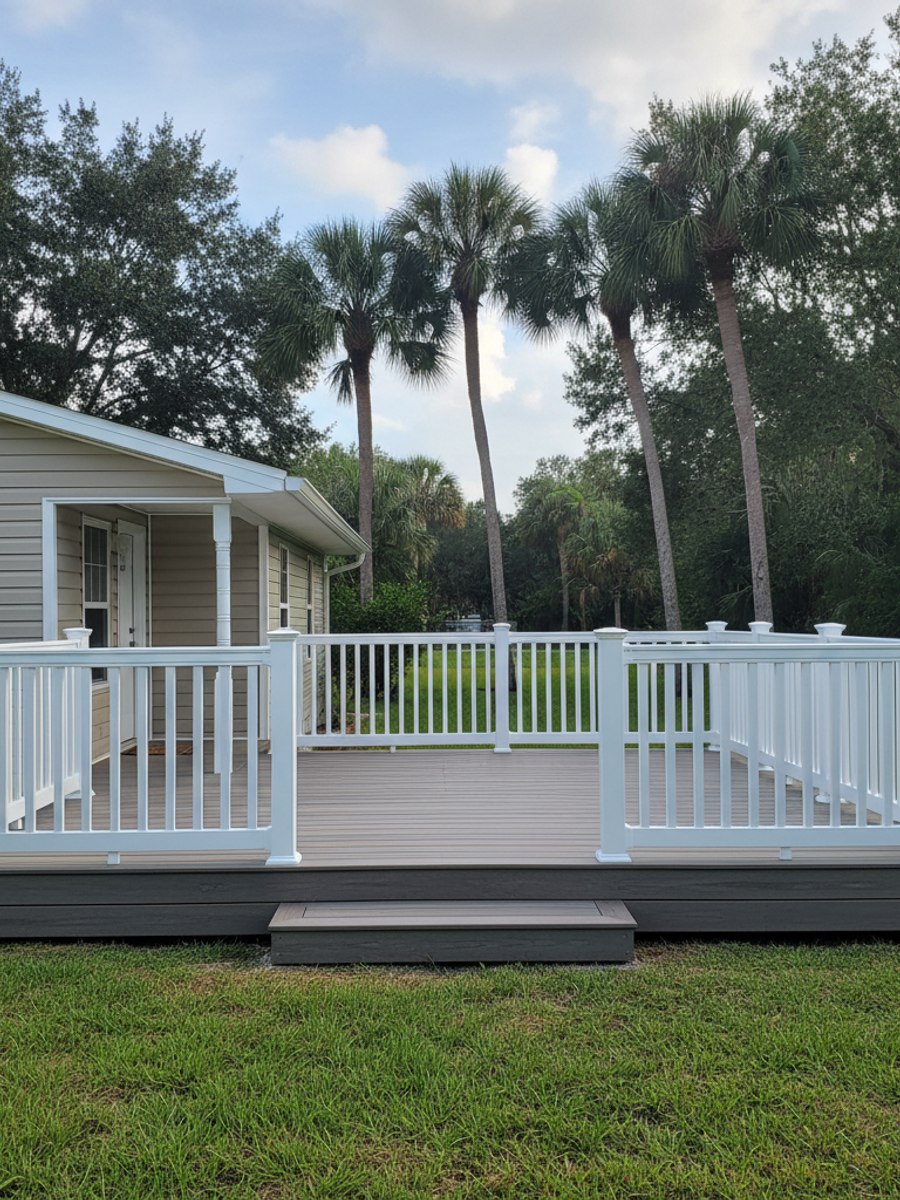
Most deck failures don't happen because a board snapped. They happen because a ledger board pulled away from the house, or a footer was never sized for the load it was carrying. Both of those are invisible once the decking goes down, which is exactly why picking the right builder matters more than picking the right stain color. You're trusting someone with the part of the job you'll never see again.
Spring Hill sits on sandy soil over limestone, and that combination shapes how a deck gets built here whether the crew tells you or not. Sand drains fast, which is good for footers, but it also means a footer that isn't dug deep enough or wide enough can shift after a wet summer. Add in wind speed requirements from the Florida Building Code, since this part of the state gets rated for hurricane exposure, and a deck here needs to resist uplift, not just hold weight. A builder who's only ever framed decks in a state with frost lines and clay soil is learning on your project.
Start with the license, not the price
Florida requires a certified or registered contractor to pull the permit for any deck attached to the house or built above a certain height, generally 30 inches off grade. Ask to see the license number and check it against the state's contractor database yourself, it takes two minutes. Ask for a certificate of insurance too, both general liability and workers' comp. If a crew member falls off a ladder on your property and the contractor has no workers' comp, that liability can land on you as the homeowner.
A low bid from an unlicensed handyman crew is not a deal. It's a deck with no inspection trail, which becomes your problem the day you try to sell the house and the buyer's inspector asks for permit records that don't exist.
The permit isn't paperwork, it's a safety check
In Hernando County, a deck permit usually means two or three inspections: one after the footers are dug and formed but before concrete is poured, one after framing is up but before the decking boards go on, and a final inspection that checks railing height and baluster spacing. Guard rails on most residential decks need to be at least 36 inches high, and the gaps between balusters can't be wider than 4 inches, that's the standard used to keep a small child from slipping through.
If a builder tells you a permit isn't necessary for your project, get that in writing and then call the county building division yourself to confirm. Sometimes it's true, a low ground-level platform deck may not need one. Often it's a shortcut that saves the contractor a week of scheduling and leaves you with an addition the county has no record of.
What's actually holding the deck up
The ledger board, the piece bolted to your house that the whole structure hangs off of, is where most collapses start. It needs to be through-bolted or lag-screwed into the rim joist, not just nailed, and it needs flashing behind it so water doesn't sit against your house framing for the next ten years. Ask how they're attaching the ledger. If the answer is vague, that's worth pausing on.
Footers here typically go down 24 to 36 inches depending on the size of the deck and what the local span tables require, set in sonotubes on undisturbed soil, not fill dirt. Concrete needs at least a day or two to cure before it takes weight, sometimes longer depending on the mix and the heat. Rushing that step to hit a schedule is how you get a footer that settles unevenly the first rainy season.
Fasteners matter more in Florida than people expect. Most treated lumber today is ACQ treated, and that chemical eats through plain galvanized screws and joist hangers over a few humid summers. Hot-dip galvanized or stainless steel hardware costs more but it's the difference between hardware that lasts and hardware that's rusting through by year five. Ask which one they're using. If they don't know what ACQ is, that's a problem.
Material choice and what this climate does to it
Pressure treated pine is the cheaper route and it moves. It shrinks, cups, and sometimes twists as it dries out in our heat, so boards need proper gapping, usually around 1/8 to 3/16 inch, to handle that movement without buckling. Composite decking skips most of that but isn't maintenance-free, some composite boards get noticeably hot underfoot in July sun, and cheaper composite lines have faded or delaminated faster than the manufacturer's marketing suggests. A builder who's installed both in this area for a while will tell you honestly which brands have held up and which haven't, rather than just pushing whatever they have a supplier deal on.
Subterranean termites are active nearly year round in this part of Florida. Any wood post or beam in direct ground contact needs to be rated for it, and some builders will set posts on concrete piers specifically to keep wood off the soil. Ask about it directly if you're going with real wood.
The contract and what should make you walk
Get a written contract that spells out the materials by brand and grade, not just "pressure treated lumber" or "composite decking." Get a payment schedule tied to milestones, not a large deposit upfront and the rest due whenever. A request for the full amount before work starts is a common warning sign in this trade. So is a contractor with no permanent address, no local references, or one who's cagey about which subcontractors will actually be on your property.
Get more than one bid, and don't just compare the bottom line. A bid that's a third cheaper than the others is usually cheaper because of what's missing, thinner footers, cheaper fasteners, no flashing, a shortcut on the permit. Ask each bidder to walk you through their footer spacing and their ledger attachment before you sign anything.
We've built and repaired enough decks around Spring Hill to know which shortcuts show up as callbacks two years later. If you want a second opinion on a bid you've already got, or you're starting from scratch, take a look at our deck builder work and we're happy to talk through what your project actually needs.