Every job below is one we do ourselves across Spring Hill.
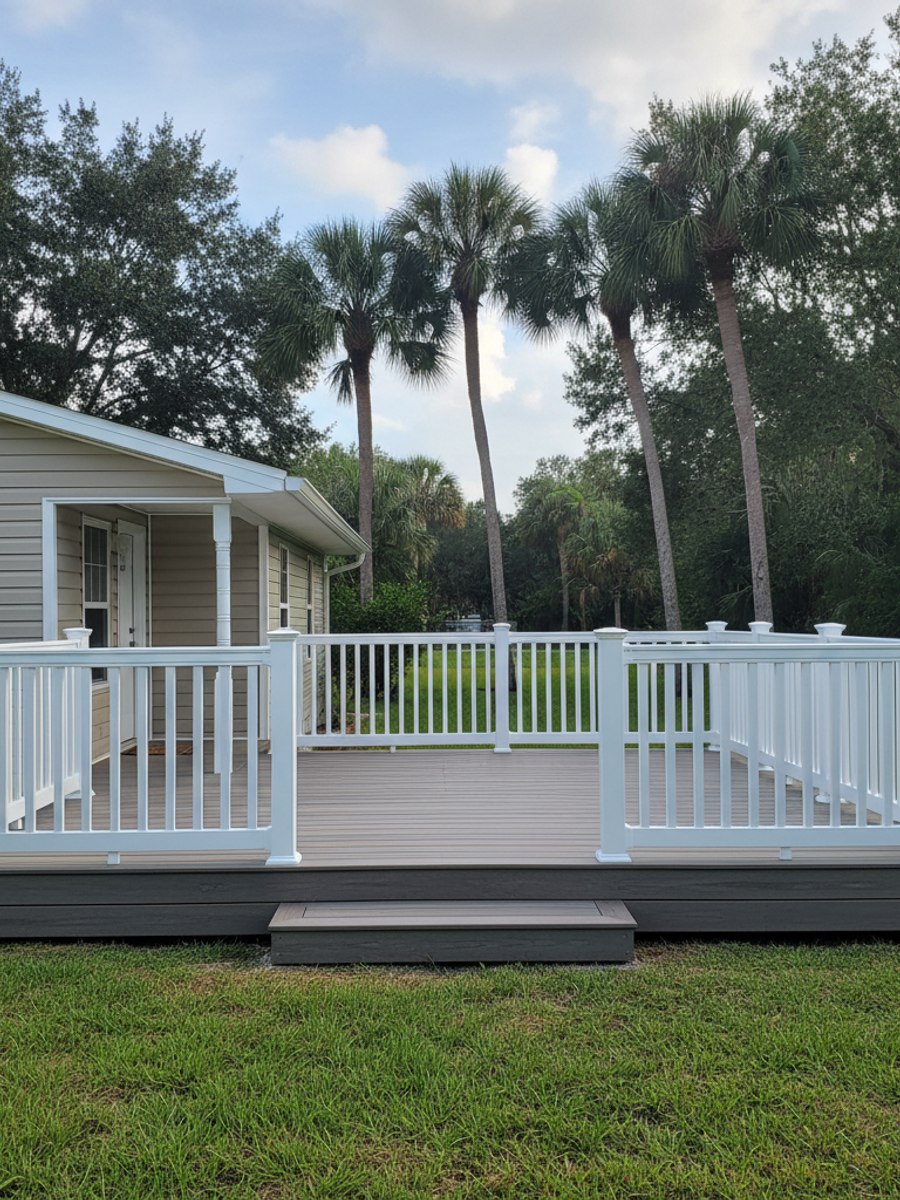
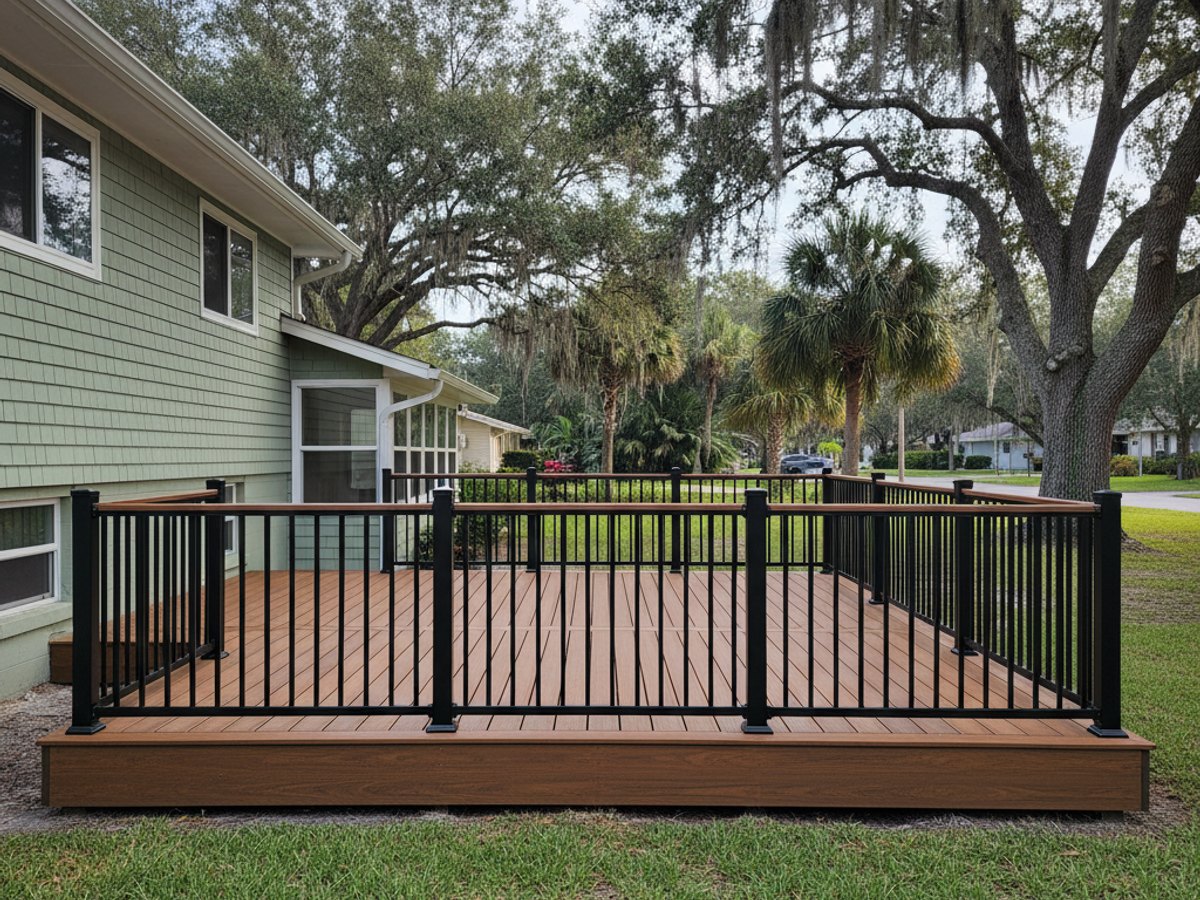
We build decks from pressure-treated pine, cedar or composite decking, set on concrete footings poured deep enough that sandy soil and fire ant mounds don't shift a post over time. Ledger boards get through-bolted and flashed so water can't get behind the house wall. Joists run 16 inches on center for pine, 12 for composite, since composite sags more between supports.
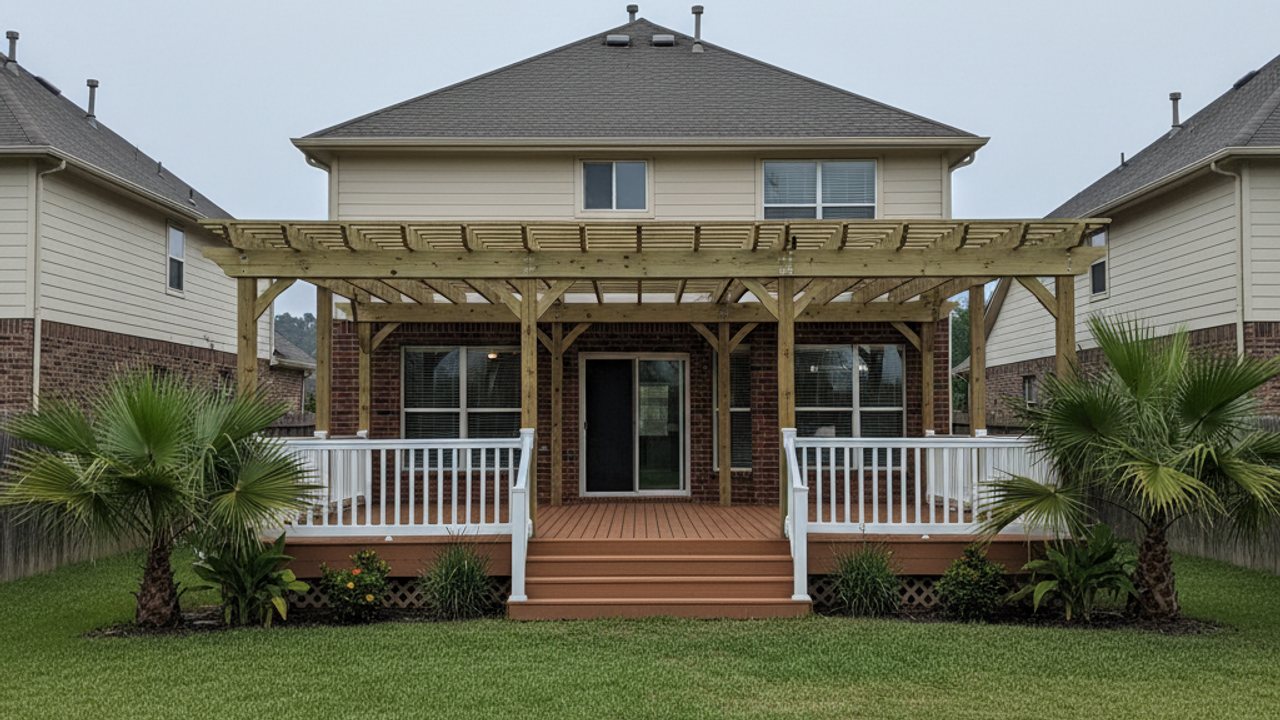
Multi-level decks, built-in benches, pergolas, whatever the yard calls for, we draw it out before cutting a single board. Beams and footings get sized to the actual load, so a hot tub deck is engineered differently than a spot for a grill.
Soft boards, wobbly railings, a ledger board pulling away from the house, all three show up a lot in Spring Hill because of the humidity and the termites. Rotted wood gets replaced, cracked joists get sistered with new lumber, and anything letting water in behind the siding gets re-flashed.
Florida sun bleaches and dries out wood fast, and afternoon rain gets into any bare grain left unprotected. Boards get pressure washed, dried down to the right moisture level, then sealed with a penetrating stain rated for UV and standing water. Skip this every year or two and cupped boards show up within three summers.
Composite costs more up front but skips the yearly staining and the splinters. Hidden fastener clips on grooved-edge boards keep the surface free of screw heads, with the same 1/8 inch gap between boards for drainage and heat expansion.
If the frame underneath is solid but the decking on top is checked, gray or splintering, it can be stripped down to the joists and replaced without touching the substructure. That's usually a fraction of the cost of a full rebuild.
Loose balusters and a railing that flexes when you lean on it usually means the post attachment failed, not the railing itself. Posts get bolted through the rim joist with structural screws rated for outdoor use, not deck screws doing a job they weren't built for.
A lot of homeowners want the deck for grilling and a screened section for sitting out without the no-see-ums. The screen enclosure gets framed off the same deck structure, with separate footings added where the roof load needs them.
Pool decks need decking that stays cool underfoot and drains fast, so capped composite or coated concrete usually beats standard wood here. Board spacing and slope matter more than usual, since a deck that holds water next to a pool turns into an algae problem by June.
Sometimes the old deck is far enough gone that repair doesn't make sense, rotted ledger boards, joists sistered on top of joists, posts sitting in standing water. It gets torn out and hauled off, with the house band board checked before anything new goes back up.
Four steps, and no surprises in any of them.
You tell us what you want doing, we look at what is actually there, and we ask the awkward questions early.
In writing, itemised, free. If something might add cost later we flag it now rather than at the end.
Same crew throughout. We cover your floors, keep the dust down and tidy up before we leave each day.
You point out anything you are not happy with and we fix it before the invoice, not after.
Deck installation, repair and staining covered throughout this part of Florida.
Questions that come up once a deck project is actually underway.
Describe the problem and we will tell you what it probably is. No obligation.